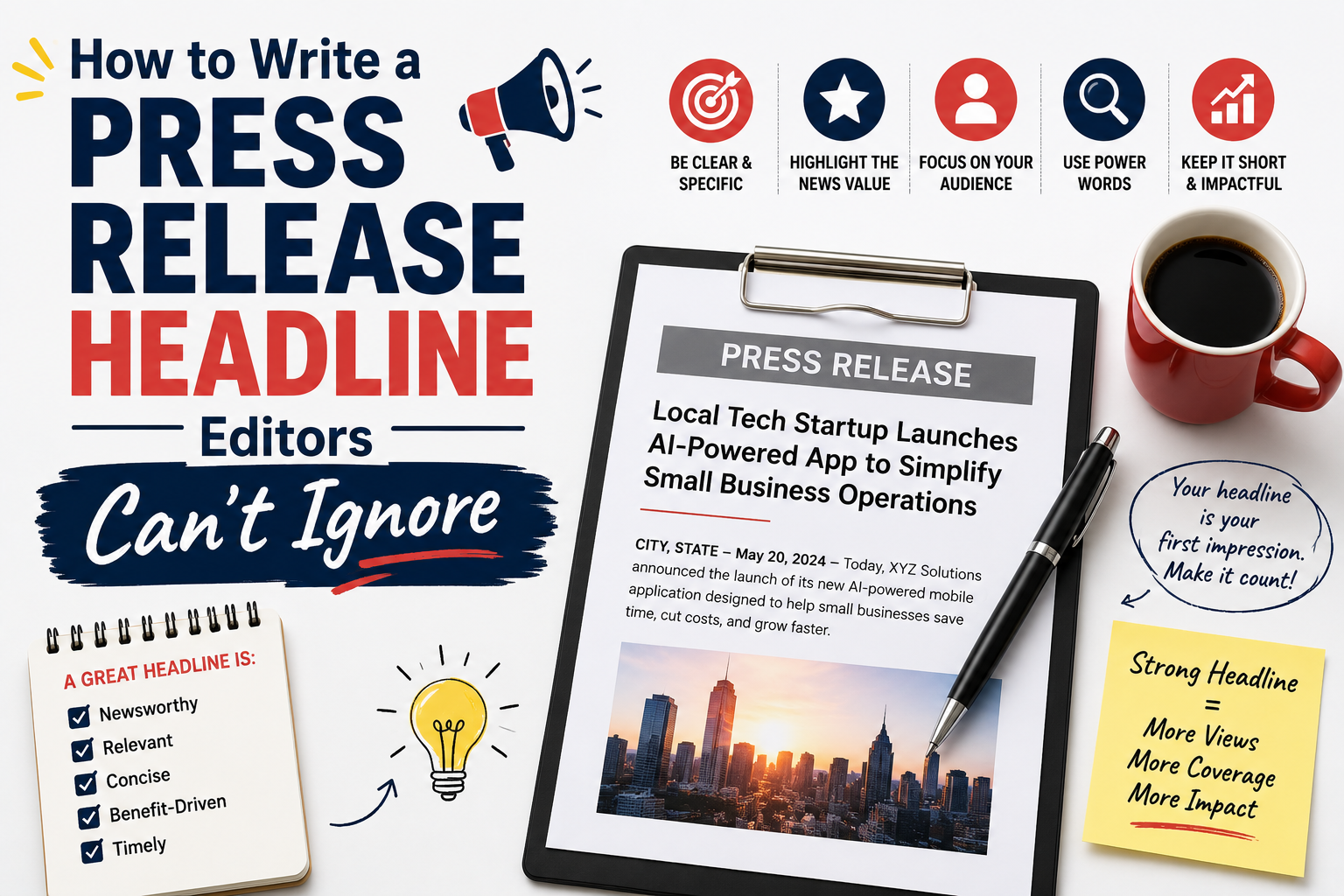
Your press release headline is the first thing editors, journalists, and readers notice. It determines whether someone opens your announcement or moves on to the next email in their inbox. Even if your press release contains an important story, a weak headline can prevent it from getting the attention it deserves.
An effective headline does more than summarize your news. It quickly communicates the value of the story, sparks curiosity without being misleading, and encourages editors to read further. The best headlines are clear, informative, and focused on what makes the announcement newsworthy.
This guide explains how to write press release headlines that capture attention, improve media interest, and increase the chances of your story being published.
Why the Headline Matters
Editors review countless press releases every day. Since they have limited time, they often decide within seconds whether a story is worth reading.
A strong headline can help you:
- Increase email open rates
- Capture media attention
- Improve reader engagement
- Communicate the story quickly
- Encourage publication
- Increase online visibility
- Build brand credibility
- Support your overall PR strategy
Your headline is the gateway to the rest of your press release.
Focus on the News
The headline should highlight the actual news instead of promoting your company.
Good examples of newsworthy topics include:
- Product launches
- Business expansions
- Strategic partnerships
- Awards
- Research findings
- Leadership appointments
- Community initiatives
- Company milestones
Editors are looking for stories that matter to their audience, not advertising messages.
Keep It Clear and Specific
Clarity is more important than clever wording.
Readers should immediately understand:
- Who is involved
- What happened
- Why it matters
Avoid vague headlines that leave people guessing.
Instead of:
“Big Things Are Happening at Our Company”
Write something like:
“Local Technology Firm Launches AI Powered Customer Support Platform”
Specific headlines provide context immediately.
Keep the Length Manageable
Most effective press release headlines are between 8 and 14 words.
Short headlines are easier to read, display better in search results, and fit neatly into email subject lines and news feeds.
If the headline becomes too long, important information may be cut off.
Lead With the Most Important Information
Place the key news at the beginning of the headline.
For example:
- Startup Secures Series A Funding for Healthcare Platform
- Manufacturing Company Opens New Distribution Center
- Local Charity Launches Annual Food Donation Campaign
Leading with the news helps editors understand the story instantly.
Use Strong Action Words
Action verbs make headlines more engaging.
Examples include:
- Launches
- Announces
- Expands
- Introduces
- Unveils
- Partners
- Celebrates
- Achieves
- Opens
- Releases
These words create momentum while clearly describing the announcement.
Avoid Promotional Language
Editors generally ignore headlines that sound like advertisements.
Avoid phrases such as:
- Best in the industry
- Revolutionary solution
- Incredible opportunity
- Amazing product
- World changing innovation
Instead, focus on factual, verifiable information.
Credibility is more valuable than exaggeration.
Include Relevant Keywords Naturally
If your press release will also be published online, include keywords that describe the topic naturally.
Examples might include:
- Business expansion
- Product launch
- Charity event
- Software update
- Industry report
- Community program
- Research study
Avoid stuffing multiple keywords into the headline.
Natural language performs better for both readers and search engines.
Highlight the Benefit
Whenever possible, explain why the announcement matters.
Instead of simply stating what happened, show its impact.
For example:
“Company Launches Free Digital Literacy Program for Local Students”
This explains not only the announcement but also who benefits.
Mention Recognizable Names When Relevant
If your story involves a well known organization, event, or partnership, including that information can increase interest.
Examples include:
- Industry associations
- Government initiatives
- Major conferences
- Research institutions
- Community organizations
Only include names that are genuinely relevant to the story.
Avoid Clickbait
Curiosity should never come at the expense of accuracy.
Avoid headlines like:
- You Won’t Believe What This Business Just Did
- The Secret Every Entrepreneur Needs
- This Changes Everything
These styles reduce credibility and rarely appeal to professional editors.
A press release should inform, not sensationalize.
Test Multiple Headlines
Don’t settle for the first headline you write.
Create several variations and compare them.
Ask questions such as:
- Which version communicates the news most clearly?
- Which sounds the most professional?
- Which would attract an editor’s attention?
- Which best reflects the content?
Small wording changes can significantly improve effectiveness.
Support the Headline With a Strong Subheading
If additional explanation is needed, use a subheading to provide more context.
The subheading should expand on the main announcement without repeating the headline.
Together, the headline and subheading should clearly communicate the story.
Learn From Published Press Releases
Reading announcements published by respected organizations can help you recognize effective headline structures.
Notice how successful headlines:
- Lead with the news
- Stay concise
- Avoid unnecessary adjectives
- Focus on relevance
- Communicate value immediately
Studying real examples helps improve your own writing.
Common Mistakes to Avoid
Many press release headlines fail because they make avoidable mistakes.
Avoid:
- Writing headlines that sound like advertisements
- Being too vague
- Making unsupported claims
- Using excessive punctuation
- Writing overly long headlines
- Including unnecessary jargon
- Hiding the main news
- Stuffing keywords
- Using clickbait language
- Forgetting the audience
Simple, factual headlines are generally more successful.
Tips for Better Press Release Headlines
Improve your headlines by following these best practices:
- Focus on genuine news.
- Keep the wording concise.
- Lead with the most important information.
- Use strong action verbs.
- Include specific details.
- Write naturally.
- Avoid exaggerated claims.
- Mention benefits when appropriate.
- Test multiple versions.
- Match the headline to the actual content.
Consistency and clarity increase the likelihood of media interest.
Examples of Strong Press Release Headlines
Here are a few examples of effective headline styles:
- Regional Retailer Opens Fifth Store to Meet Growing Customer Demand
- Software Company Introduces AI Powered Analytics Platform
- Local Nonprofit Launches Community Scholarship Program
- Healthcare Startup Announces Partnership With Regional Hospital Network
- Manufacturing Firm Celebrates 50 Years of Innovation
Each example clearly explains the announcement while remaining concise and informative.
Final Thoughts
A strong press release headline can make the difference between earning media attention and being overlooked. Editors are looking for stories that are relevant, timely, and easy to understand. By focusing on genuine news, using clear language, avoiding promotional claims, and highlighting the value of your announcement, you improve the chances that your press release will be read and considered for publication.
Rather than trying to impress with clever wording, prioritize accuracy, clarity, and relevance. A headline that quickly communicates why the story matters is far more likely to capture attention and encourage editors to read the rest of your announcement.
Frequently Asked Questions
1. Why is the press release headline so important?
The headline is the first element editors and journalists see. It determines whether they continue reading or move on to another story.
2. How long should a press release headline be?
Most effective headlines contain between 8 and 14 words, making them concise while still communicating the main announcement clearly.
3. Should I include keywords in my headline?
Yes, but only when they fit naturally. Use relevant terms that describe the announcement without making the headline feel forced or overloaded.
4. What makes a press release headline newsworthy?
A newsworthy headline clearly explains an important event such as a product launch, partnership, award, expansion, research finding, or community initiative.
5. Should my headline mention my company name?
If your company is well known or central to the announcement, including the name can add context. Otherwise, focus first on the news itself.
6. Can I use questions in a press release headline?
Generally, no. Statements are more direct, professional, and informative than questions, making them more suitable for press releases.
7. What should I avoid in a press release headline?
Avoid clickbait, vague wording, exaggerated claims, excessive punctuation, jargon, keyword stuffing, and promotional language that sounds like advertising.
8. Is it helpful to write multiple headline options?
Yes. Drafting several versions allows you to compare clarity, relevance, and impact before choosing the strongest headline.
9. Can a good headline improve media coverage?
A compelling headline increases the likelihood that editors will read your press release, improving your chances of receiving media attention and publication.
10. What is the biggest mistake when writing press release headlines?
The most common mistake is focusing on promotional language instead of communicating genuine, newsworthy information that is relevant to journalists and their audiences.