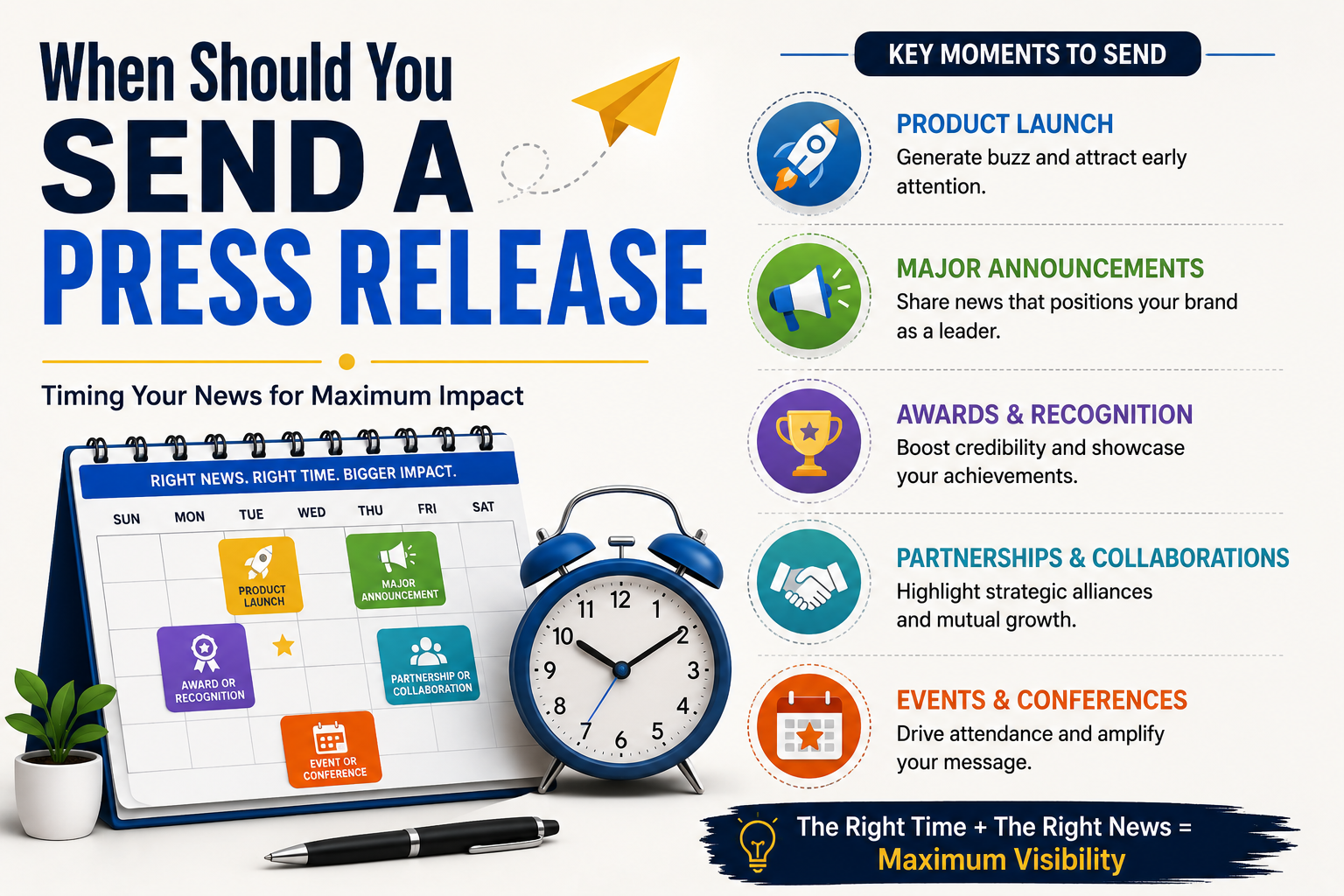
Timing plays a major role in the success of any press release. Even the most newsworthy announcement can receive little attention if it reaches journalists at the wrong time. On the other hand, distributing a well written press release at the right moment can improve media coverage, increase brand visibility, and generate stronger engagement from your target audience.
Many businesses focus heavily on writing the perfect press release but overlook when it should be sent. Understanding the best timing for different types of announcements helps maximize the chances of getting noticed by journalists, bloggers, industry publications, and potential customers.
This guide explains when you should send a press release, how timing affects results, and the best practices for planning successful media outreach.
Why Timing Matters
Journalists receive hundreds of emails every day. Sending your announcement when editors are actively reviewing news can significantly improve the likelihood of your story being opened and considered.
Proper timing can help you:
- Increase media coverage
- Improve open rates
- Generate more website traffic
- Reach your audience before competitors
- Maximize event attendance
- Build stronger brand awareness
- Encourage social sharing
- Gain faster media responses
Choosing the right time is just as important as choosing the right story.
Send a Press Release When You Have Real News
A press release should always be based on something genuinely newsworthy.
Common reasons to distribute a press release include:
- Product launches
- New service announcements
- Business expansions
- Company milestones
- Awards and recognitions
- Leadership appointments
- Strategic partnerships
- Charity events
- Research findings
- Major investments
Avoid sending press releases simply to maintain visibility. Every announcement should provide value to readers and the media.
Best Days to Send a Press Release
While every industry is different, some days generally perform better than others.
Tuesday
Tuesday is often considered one of the strongest days for media outreach because journalists have settled into the workweek and are actively looking for stories.
Wednesday
Midweek continues to offer good opportunities for media coverage, particularly for business and industry announcements.
Thursday
Thursday can also perform well, especially for announcements that are not tied to breaking news or weekend events.
Many PR professionals avoid Mondays because journalists are often catching up on emails and assignments from the weekend. Fridays may receive less attention as newsrooms prepare for the weekend schedule.
Best Time of Day
Morning distribution is generally preferred.
Sending a press release between 8:00 AM and 11:00 AM in the target audience’s time zone often gives journalists enough time to review the story before planning their daily coverage.
Afternoon releases may still perform well, but they can face greater competition from other announcements or be delayed until the following day.
Timing for Event Announcements
If you are promoting an event, distribute your press release well in advance.
General guidelines include:
- Small local events: Two to three weeks before the event
- Conferences: Four to six weeks before the event
- Charity events: Three to four weeks before the event
- Product launches: One to two weeks before launch
- Trade shows: Four weeks before opening
This gives media outlets enough time to plan coverage while allowing attendees to register or make arrangements.
Timing for Product Launches
Product announcements should be released before the official launch whenever possible.
This allows:
- Journalists to prepare stories
- Customers to learn about the product
- Industry publications to schedule coverage
- Partners to share the announcement
Some businesses also provide embargoed press releases to selected journalists before the public announcement.
Timing for Awards and Achievements
Distribute award announcements soon after receiving official confirmation.
Delaying too long may reduce the news value and increase the chance that competitors receive more attention for similar achievements.
Timing for Business Milestones
Major milestones deserve timely announcements.
Examples include:
- Business anniversaries
- Revenue milestones
- Customer growth
- Office expansions
- New locations
- Major hiring initiatives
Publishing these updates while they are current helps maintain relevance.
Consider Your Industry
Different industries have different news cycles.
For example:
- Technology companies often align announcements with product launches or conferences.
- Retail businesses may announce seasonal promotions before shopping periods.
- Educational organizations often follow academic calendars.
- Tourism businesses may focus on holiday travel seasons.
- Healthcare organizations may coordinate announcements with awareness campaigns.
Understanding your industry’s schedule helps you identify the best opportunities for media attention.
Avoid Competing With Major News
Even a strong press release can be overlooked during major national or international news events.
Monitor the news before distributing your announcement.
Consider delaying your press release if:
- Major elections dominate headlines
- Significant natural disasters occur
- Global economic events receive widespread coverage
- Industry breaking news overshadows your announcement
Waiting for a quieter news cycle can improve visibility.
Plan Your PR Calendar
Rather than creating press releases at the last minute, develop an annual communication calendar.
Include planned announcements such as:
- Product launches
- Seasonal campaigns
- Company anniversaries
- Industry events
- Conferences
- Award submissions
- Community projects
- New partnerships
Planning ahead improves consistency and reduces rushed communication.
Coordinate With Marketing Activities
Press releases should support your broader marketing strategy.
Align your announcement with:
- Website updates
- Blog articles
- Email campaigns
- Social media promotions
- Paid advertising
- Video content
- Customer newsletters
A coordinated launch creates greater impact across multiple channels.
Follow Up With Journalists
Sending the press release is only the beginning.
A polite follow up email after a few days can:
- Answer questions
- Offer interviews
- Provide additional information
- Increase the likelihood of coverage
Avoid excessive follow ups, which may damage relationships with journalists.
Measure the Results
After distribution, monitor the performance of your announcement.
Track metrics such as:
- Media mentions
- Website traffic
- Referral visitors
- Social shares
- Customer inquiries
- Event registrations
- Lead generation
- Brand searches
- Email engagement
- Conversion rates
These insights help improve future timing decisions.
Common Mistakes to Avoid
Many businesses reduce the effectiveness of their press releases by overlooking timing.
Avoid:
- Sending announcements without genuine news
- Waiting until after an event has occurred
- Publishing during major breaking news
- Sending releases late on Fridays
- Ignoring time zones
- Distributing incomplete information
- Missing important seasonal opportunities
- Failing to coordinate with marketing campaigns
- Sending press releases at inconsistent intervals
- Not following up with relevant media contacts
Strategic planning helps maximize every announcement.
Best Practices for Press Release Timing
To improve your results:
- Share news while it is still relevant.
- Plan announcements well in advance.
- Distribute during normal business hours.
- Consider your audience’s time zone.
- Monitor current events before sending.
- Coordinate with your marketing activities.
- Give journalists enough time to prepare coverage.
- Review campaign performance after every distribution.
A consistent and thoughtful approach leads to stronger media relationships and better visibility.
Final Thoughts
Knowing when to send a press release is just as important as knowing how to write one. The right timing can increase media attention, improve audience engagement, and maximize the value of your announcement. Whether you’re launching a product, celebrating a company milestone, announcing an event, or sharing important business news, planning your distribution around relevant timelines and media schedules gives your story the best chance of success.
Instead of treating press releases as one time marketing activities, incorporate them into a long term communication strategy that supports your business goals throughout the year. Consistent planning, genuine news, and strategic timing will help your announcements reach the right people at the right moment.
Frequently Asked Questions
1. When is the best day to send a press release?
Tuesday, Wednesday, and Thursday are generally considered the best days because journalists are actively reviewing stories and planning coverage during the middle of the workweek.
2. What time should I distribute a press release?
Morning, typically between 8:00 AM and 11:00 AM in your target audience’s time zone, is often the most effective period for distribution.
3. How far in advance should I announce an event?
Most events should be announced two to six weeks in advance, depending on their size and audience, to allow sufficient time for media coverage and attendee planning.
4. Should I send a press release on a Friday?
Fridays are usually less effective because many newsrooms reduce activity before the weekend. Unless the news is time sensitive, midweek distribution is often a better choice.
5. Can I send a press release during major news events?
It’s generally better to avoid distributing non urgent announcements during major national or global news events, as media attention will likely be focused elsewhere.
6. How often should a business send press releases?
There is no fixed schedule. Businesses should distribute press releases whenever they have meaningful, newsworthy announcements rather than publishing them simply to maintain visibility.
7. Should I coordinate my press release with other marketing activities?
Yes. Aligning your press release with website updates, blog posts, email campaigns, and social media promotions creates a stronger and more consistent marketing campaign.
8. What is the biggest timing mistake businesses make?
One of the most common mistakes is sending a press release too late, especially after an event or announcement has already occurred, reducing its news value.
9. Do time zones matter when sending press releases?
Absolutely. Always consider the time zone of the journalists and audience you are targeting to ensure your announcement arrives during normal business hours.
10. Can good timing guarantee media coverage?
No. While timing improves the chances of your press release being noticed, the quality, relevance, and newsworthiness of the announcement remain the most important factors in securing media attention.