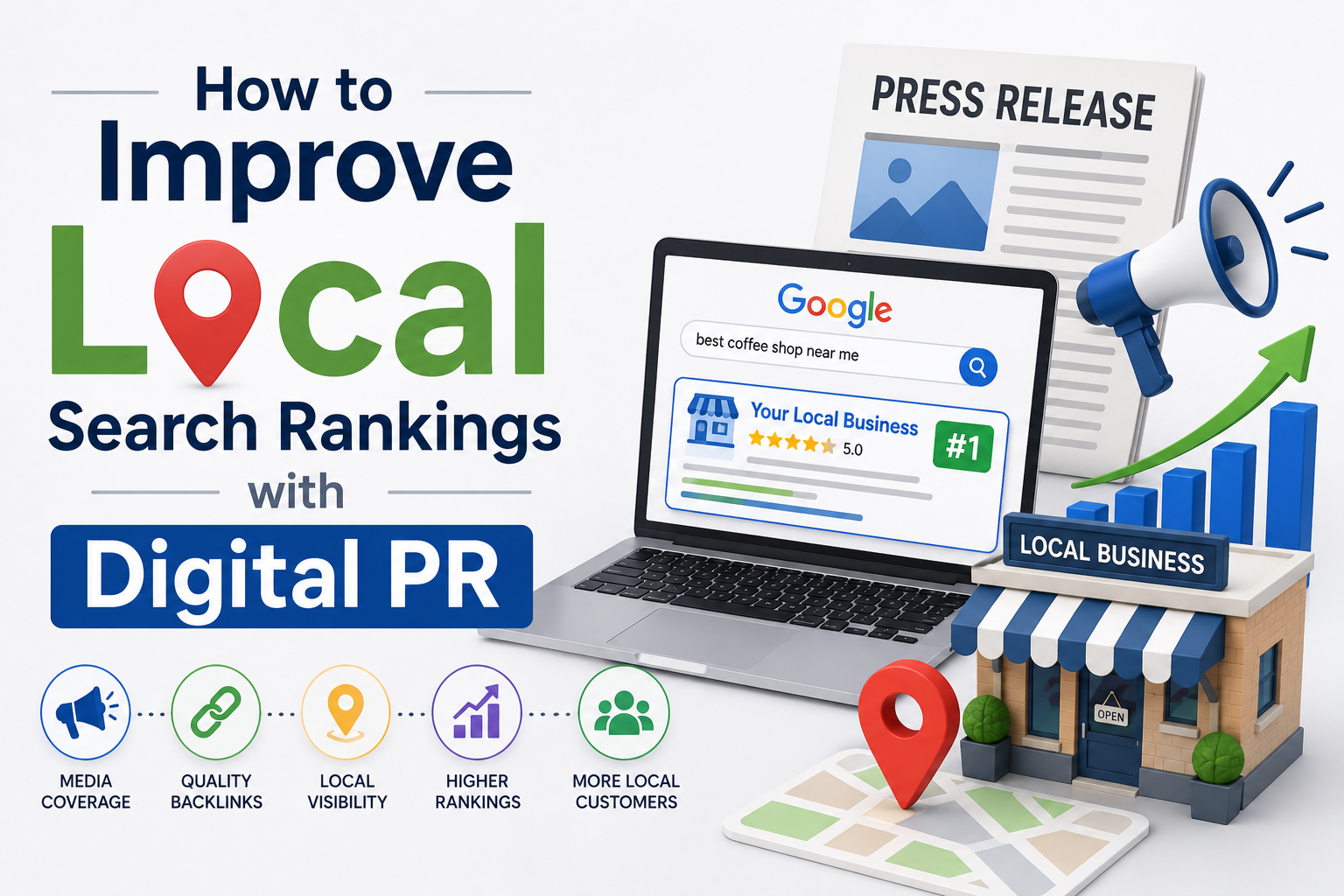
Appearing on the first page of search results can transform a local business. Whether it’s a family owned restaurant, a law firm, a real estate agency, or a neighborhood retail store, higher visibility often leads to more website visits, customer inquiries, and sales. While many businesses focus only on traditional SEO, public relations (PR) can play a powerful role in improving online visibility and building long term credibility.
A well executed PR campaign helps businesses earn media coverage, generate brand mentions, and strengthen their online presence through trusted publications. These signals can increase awareness, improve brand authority, and support stronger search performance over time.
This article explores how a local business can use public relations to improve its visibility and earn a place on the first page of search results.
Why First Page Rankings Matter
Most people rarely look beyond the first page when searching for local products or services. Businesses that appear near the top enjoy greater exposure and are more likely to receive clicks than those buried in later pages.
Benefits of first page visibility include:
- More website visitors
- Increased customer trust
- Higher click through rates
- Greater brand recognition
- More phone calls and inquiries
- Better local reputation
- Increased sales opportunities
- Long term business growth
For local businesses, strong visibility often means becoming the preferred choice within the community.
The Challenge Before PR
Many local businesses face similar problems.
Common issues include:
- Limited online visibility
- Few mentions across trusted websites
- Low brand awareness
- Minimal referral traffic
- Weak authority compared to competitors
- Slow organic growth
- Limited local recognition
Even businesses with excellent products and services can struggle if few people know they exist.
Why PR Supports Search Visibility
Public relations and search optimization work well together because both focus on increasing visibility and building trust.
A successful PR campaign can generate:
- Media coverage
- Brand mentions
- Referral traffic
- Customer engagement
- Community recognition
- Local authority
- High quality backlinks
- Increased branded searches
These outcomes help strengthen a business’s overall online presence.
Step 1: Identify a Newsworthy Story
Journalists are interested in meaningful stories, not advertisements.
Examples of newsworthy announcements include:
- Grand openings
- Business anniversaries
- Community partnerships
- Charity events
- New product launches
- Awards and recognitions
- Expansion plans
- Local hiring initiatives
A story that benefits the community is more likely to receive media attention.
Step 2: Write a Strong Press Release
The press release should focus on the news rather than sales.
Include:
- A compelling headline
- Clear introduction
- Business background
- Event or announcement details
- Relevant quotes
- Contact information
Simple, factual writing increases the likelihood of publication.
Step 3: Target Local Media
Local news outlets are often eager to cover stories that affect their communities.
Potential distribution channels include:
- Local newspapers
- Community magazines
- Regional business journals
- Local radio stations
- Television news websites
- City blogs
- Chamber of commerce newsletters
- Community event calendars
Local coverage often creates a strong foundation for wider visibility.
Step 4: Build Community Relationships
PR extends beyond media outreach.
Participating in community activities can create additional opportunities for coverage.
Examples include:
- Sponsoring local events
- Supporting charities
- Hosting educational workshops
- Participating in business expos
- Partnering with schools
- Organizing volunteer activities
Community involvement strengthens both reputation and visibility.
Step 5: Share the Story Everywhere
After the press release is published, continue promoting the announcement.
Share it through:
- Your website
- Blog articles
- Email newsletters
- Social media platforms
- Business profiles
- Industry communities
Repurposing the content increases its reach and lifespan.
Step 6: Monitor the Results
Successful PR campaigns are measured through data.
Track:
- Website traffic
- Referral visitors
- Branded search growth
- Phone inquiries
- Contact form submissions
- Social engagement
- Media mentions
- Local search rankings
These insights help identify which PR activities produce the greatest impact.
A Typical Before and After Scenario
Consider a local home renovation company looking to increase visibility.
Before PR
- Limited website traffic
- Few online mentions
- Low rankings for local service searches
- Minimal community recognition
- Heavy reliance on paid advertising
After Several PR Campaigns
- Coverage by local news websites
- Features in community publications
- Increased branded searches
- Higher referral traffic
- More customer inquiries
- Stronger online reputation
- Improved local search visibility
While results vary, consistent PR efforts often contribute to greater brand recognition and stronger search performance.
Why Media Coverage Builds Trust
People naturally trust businesses that are mentioned by respected publications.
Media coverage demonstrates that:
- Your business is active.
- Your company contributes to the community.
- Others recognize your achievements.
- Your brand has credibility.
This trust often influences purchasing decisions before customers even visit your website.
Combining PR With Local SEO
Public relations delivers the best results when combined with strong local optimization.
Support your PR efforts by:
- Keeping your business information consistent across directories
- Collecting genuine customer reviews
- Publishing helpful blog content
- Optimizing your Google Business Profile
- Using location specific keywords naturally
- Creating locally relevant landing pages
Together, these strategies strengthen your online presence.
Common Mistakes to Avoid
Many businesses miss valuable opportunities by making avoidable mistakes.
Avoid:
- Publishing promotional rather than newsworthy announcements
- Ignoring local media opportunities
- Sending generic press releases
- Failing to follow up with journalists
- Not promoting published coverage
- Overlooking community engagement
- Ignoring performance tracking
- Expecting overnight ranking improvements
- Inconsistent communication
- Forgetting to update your website with recent news
Consistency is far more effective than occasional publicity.
Long Term Benefits of PR
Public relations creates value beyond immediate media coverage.
Over time, businesses may experience:
- Greater brand awareness
- Increased customer trust
- Stronger community relationships
- More partnership opportunities
- Better online reputation
- Higher referral traffic
- Improved authority within their industry
- Sustainable growth in organic visibility
These long term benefits make PR an important investment for businesses seeking lasting success.
Final Thoughts
A local business does not need a massive marketing budget to improve its online visibility. By sharing meaningful stories, building relationships with local media, participating in community initiatives, and consistently communicating with the public, businesses can strengthen their reputation and expand their reach.
While ranking on the first page of search results depends on many factors, strategic public relations can play an important supporting role by increasing brand awareness, earning trusted media mentions, driving referral traffic, and encouraging more people to search for and engage with your business. When combined with quality content and effective local SEO practices, PR becomes a powerful tool for long term growth.
Frequently Asked Questions
1. Can public relations help improve local search rankings?
Yes. While PR is not a direct ranking factor, it can increase brand awareness, generate media mentions, drive referral traffic, and strengthen your online authority, all of which support better search visibility over time.
2. What types of local business stories attract media attention?
Grand openings, anniversaries, awards, community partnerships, charity events, business expansions, new services, and local success stories are all examples of newsworthy announcements.
3. How long does it take for PR efforts to show results?
Media coverage and referral traffic may appear within days or weeks, while broader improvements in visibility, brand recognition, and search performance often develop through consistent long term efforts.
4. Should small businesses focus on local media first?
Yes. Local newspapers, community blogs, regional magazines, and local television or radio stations often provide valuable exposure and help establish credibility within your target market.
5. Is one press release enough to improve visibility?
Usually not. Regular press releases, community involvement, and ongoing media outreach create stronger long term results than a single announcement.
6. Can PR replace local SEO?
No. PR and local SEO work best together. PR builds awareness and credibility, while local SEO improves your ability to appear in relevant local search results.
7. How can I measure the success of a local PR campaign?
Monitor website traffic, branded searches, media mentions, referral visitors, phone calls, contact form submissions, customer inquiries, and local search performance to evaluate your campaign’s effectiveness.
8. What is the biggest PR mistake local businesses make?
The most common mistake is treating press releases as advertisements instead of sharing genuinely newsworthy stories that provide value to journalists and the local community.
9. Does community involvement help with PR?
Yes. Sponsoring events, supporting charities, partnering with local organizations, and participating in community activities often create additional media opportunities and strengthen your brand’s reputation.
10. Why is trust important for local businesses?
Customers are more likely to choose businesses they recognize and trust. Positive media coverage, community engagement, and a consistent public presence help establish credibility, making your business a stronger choice when people search for local products or services.