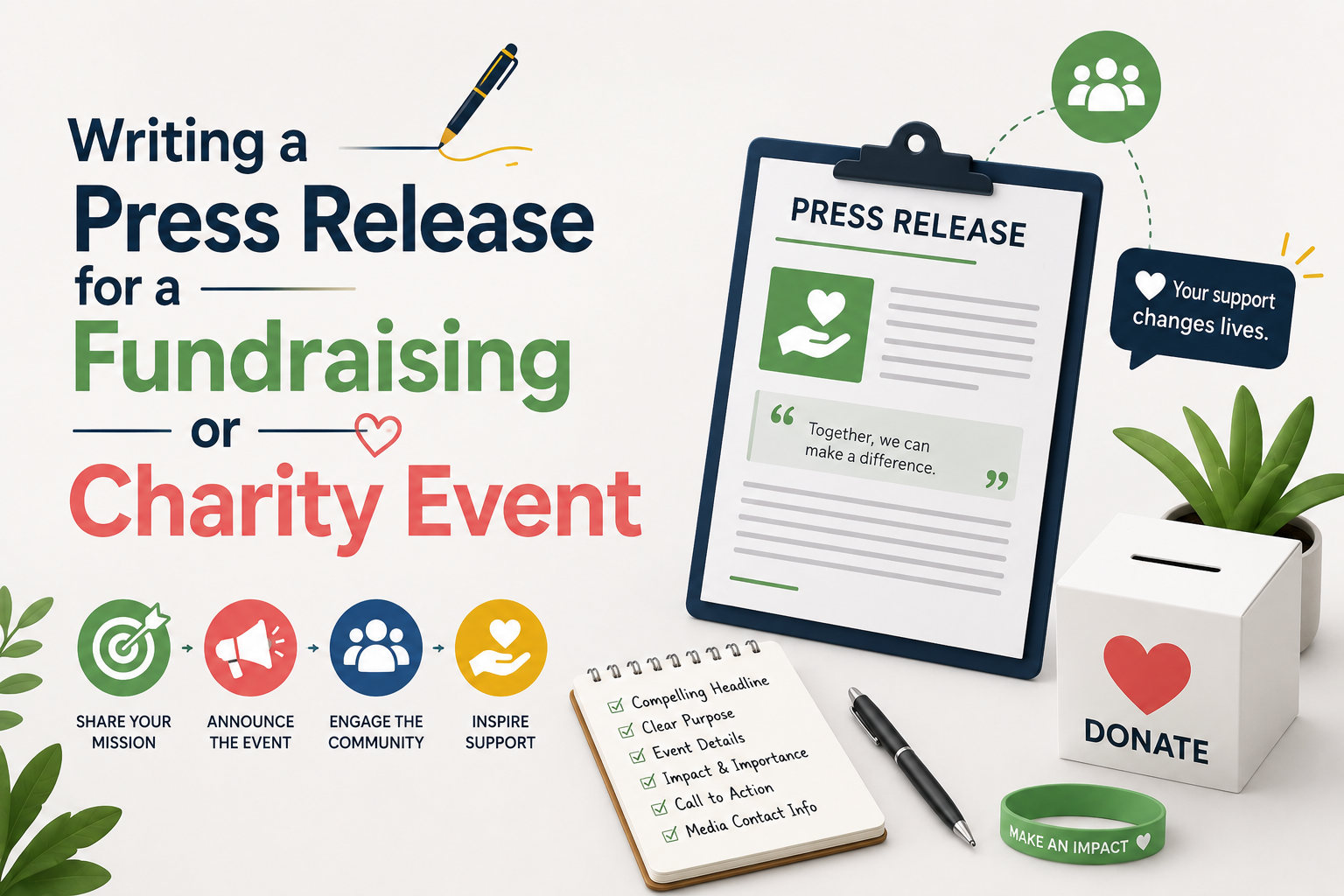
Fundraising and charity events are about more than raising money. They create opportunities to inspire communities, support meaningful causes, and encourage people to get involved. However, even the most impactful event can go unnoticed if people never hear about it. That’s where a well written press release becomes an essential communication tool.
A press release helps spread the word about your fundraising campaign by sharing important details with journalists, bloggers, local media, and community organizations. It increases awareness, attracts attendees, encourages donations, and highlights the purpose behind your event. Whether you are organizing a charity run, auction, benefit concert, food drive, or nonprofit fundraiser, a compelling press release can significantly expand your reach.
This guide explains how to write an effective press release for a fundraising or charity event that captures attention and motivates people to take action.
Why a Press Release Matters for Charity Events
A press release gives your event credibility and provides the media with accurate information they can easily publish or reference.
Some of the key benefits include:
- Increases public awareness
- Encourages donations
- Attracts volunteers
- Generates media coverage
- Builds trust with supporters
- Promotes community engagement
- Highlights your organization’s mission
- Creates lasting visibility for future campaigns
Unlike advertisements, press releases focus on sharing meaningful news, making them more appealing to journalists and readers.
Define the Purpose of Your Press Release
Before writing, identify the primary goal of your announcement.
Your objective may be to:
- Announce a new fundraising event
- Invite the public to attend
- Recruit volunteers
- Encourage donations
- Celebrate sponsorships
- Share fundraising milestones
- Announce event results
- Raise awareness for an important cause
Keeping your purpose clear ensures your message stays focused throughout the release.
Create a Strong Headline
The headline should immediately communicate the event and its purpose.
Good headlines are:
- Clear
- Specific
- Informative
- Concise
- Interesting
Examples include:
- Local Charity Walk Aims to Raise Funds for Children’s Education
- Community Food Drive Seeks Donations to Support Families in Need
- Annual Charity Gala Returns to Raise Funds for Cancer Research
Avoid overly promotional or exaggerated headlines. Focus on the news value.
Write an Engaging Opening Paragraph
The first paragraph should answer the essential questions:
- Who is organizing the event?
- What is happening?
- When will it take place?
- Where is the event?
- Why is it important?
Readers should understand the purpose of the fundraiser within the opening few sentences.
Explain the Cause
People are more likely to support a fundraiser when they understand the impact.
Describe:
- The problem your organization addresses
- Who benefits
- Why funding is needed
- The difference donations will make
Instead of focusing only on the event itself, explain the real purpose behind it.
Include Event Details
Make it easy for readers to participate.
Include information such as:
- Date
- Time
- Venue
- Registration details
- Ticket information
- Donation options
- Dress code if applicable
- Special activities
- Guest speakers
- Entertainment
Present these details clearly so there is no confusion.
Highlight Community Impact
Show readers how their involvement creates positive change.
For example, explain:
- How many people will benefit
- Previous fundraising achievements
- Community programs supported
- Long term goals
- Success stories from earlier initiatives
Real impact encourages stronger public support.
Add Quotes
Quotes bring personality and emotion to your press release.
Include comments from:
- Organization leaders
- Event organizers
- Sponsors
- Volunteers
- Beneficiaries
- Community leaders
Effective quotes should express gratitude, explain the importance of the cause, and encourage participation.
Recognize Sponsors and Partners
If businesses or organizations are supporting the event, acknowledge their contributions.
Mention:
- Corporate sponsors
- Local businesses
- Community organizations
- Educational institutions
- Volunteer groups
Recognizing partners strengthens relationships and may encourage future sponsorships.
Include a Clear Call to Action
Tell readers exactly what they should do next.
Examples include:
- Register for the event
- Purchase tickets
- Make a donation
- Volunteer
- Share the event
- Become a sponsor
A direct call to action increases participation.
Keep the Tone Professional and Compassionate
A charity press release should balance professionalism with genuine emotion.
Avoid:
- Overly dramatic language
- Excessive self promotion
- Unsupported claims
- Emotional manipulation
Instead, focus on authentic storytelling and meaningful community impact.
Optimize for Online Visibility
If your press release will appear online, naturally include relevant search terms throughout the content.
Examples include:
- Charity fundraiser
- Fundraising event
- Community fundraiser
- Nonprofit organization
- Charity campaign
- Volunteer event
- Donation drive
Use keywords naturally without sacrificing readability.
Include Boilerplate Information
End your press release with a short description of your organization.
Your boilerplate should include:
- Organization name
- Mission
- Years of operation
- Services provided
- Website
- Contact information
This helps journalists understand who you are and where to find additional information.
Add Contact Information
Always include a media contact.
Provide:
- Contact name
- Position
- Organization
- Email address
- Phone number
- Website
Make it easy for journalists to request interviews or additional details.
Best Practices for Charity Event Press Releases
Follow these recommendations to improve your chances of media coverage.
- Keep the announcement focused on the cause.
- Write in clear, simple language.
- Use accurate facts and figures.
- Share inspiring stories where appropriate.
- Include high quality photos with your media outreach.
- Send the press release several weeks before the event.
- Follow up politely with relevant journalists.
- Share the release across your social media channels.
Consistency and professionalism help build trust with both the media and your community.
Common Mistakes to Avoid
Many fundraising announcements fail because they overlook important details.
Avoid these common mistakes:
- Writing a vague headline
- Leaving out event information
- Focusing only on the organization instead of the cause
- Using overly promotional language
- Forgetting donation instructions
- Omitting contact details
- Ignoring local media opportunities
- Sending the release too late
- Using long, difficult paragraphs
- Failing to proofread before distribution
A clear and informative press release is more likely to receive attention and encourage participation.
Sample Structure for a Fundraising Press Release
A simple structure makes the writing process easier.
- Headline
- Dateline
- Opening summary
- Background on the cause
- Event details
- Community impact
- Organizer quote
- Sponsor recognition
- Call to action
- Organization boilerplate
- Media contact information
This format ensures journalists can quickly understand and share your announcement.
Final Thoughts
A fundraising or charity event press release is more than an event announcement. It is an opportunity to inspire generosity, strengthen community relationships, and increase awareness of an important cause. By focusing on the mission, sharing meaningful stories, providing complete event details, and encouraging readers to get involved, your press release can attract media coverage and motivate people to support your initiative.
Whether your goal is to raise funds, recruit volunteers, or simply spread awareness, a well crafted press release helps your message reach the people who can make a real difference.
Frequently Asked Questions
1. What is a fundraising press release?
A fundraising press release is an official announcement that promotes a charity event, donation campaign, or nonprofit initiative while providing media outlets and the public with important event information.
2. When should I send a charity event press release?
Ideally, distribute your press release two to four weeks before the event to give journalists enough time to cover the story and allow attendees time to register or donate.
3. What information should a charity press release include?
It should include the event purpose, date, time, location, cause, organizer details, quotes, participation information, donation instructions, and media contact details.
4. How long should a fundraising press release be?
Most effective press releases range between 400 and 700 words, providing enough detail without overwhelming journalists.
5. Should I include quotes in the press release?
Yes. Quotes from organizers, nonprofit leaders, sponsors, or beneficiaries add authenticity and make the announcement more engaging for readers and the media.
6. How can I make my charity press release more newsworthy?
Focus on community impact, unique fundraising goals, inspiring stories, partnerships, major sponsors, or significant milestones rather than simply announcing an event.
7. Can a press release help attract sponsors?
Yes. Media coverage generated by a press release can increase visibility, demonstrating value to current sponsors while attracting new organizations interested in supporting your cause.
8. Should I distribute the press release online?
Yes. Publishing your press release on your website, social media platforms, email newsletters, and press release distribution services helps maximize visibility and reach a broader audience.
9. What is the biggest mistake when writing a charity event press release?
The most common mistake is focusing too much on the organization instead of explaining the cause, community impact, and why people should participate or donate.
10. Can a charity press release improve long term awareness?
Absolutely. A well distributed press release can generate ongoing media coverage, increase public trust, strengthen your organization’s reputation, and encourage continued community support beyond a single fundraising event.